
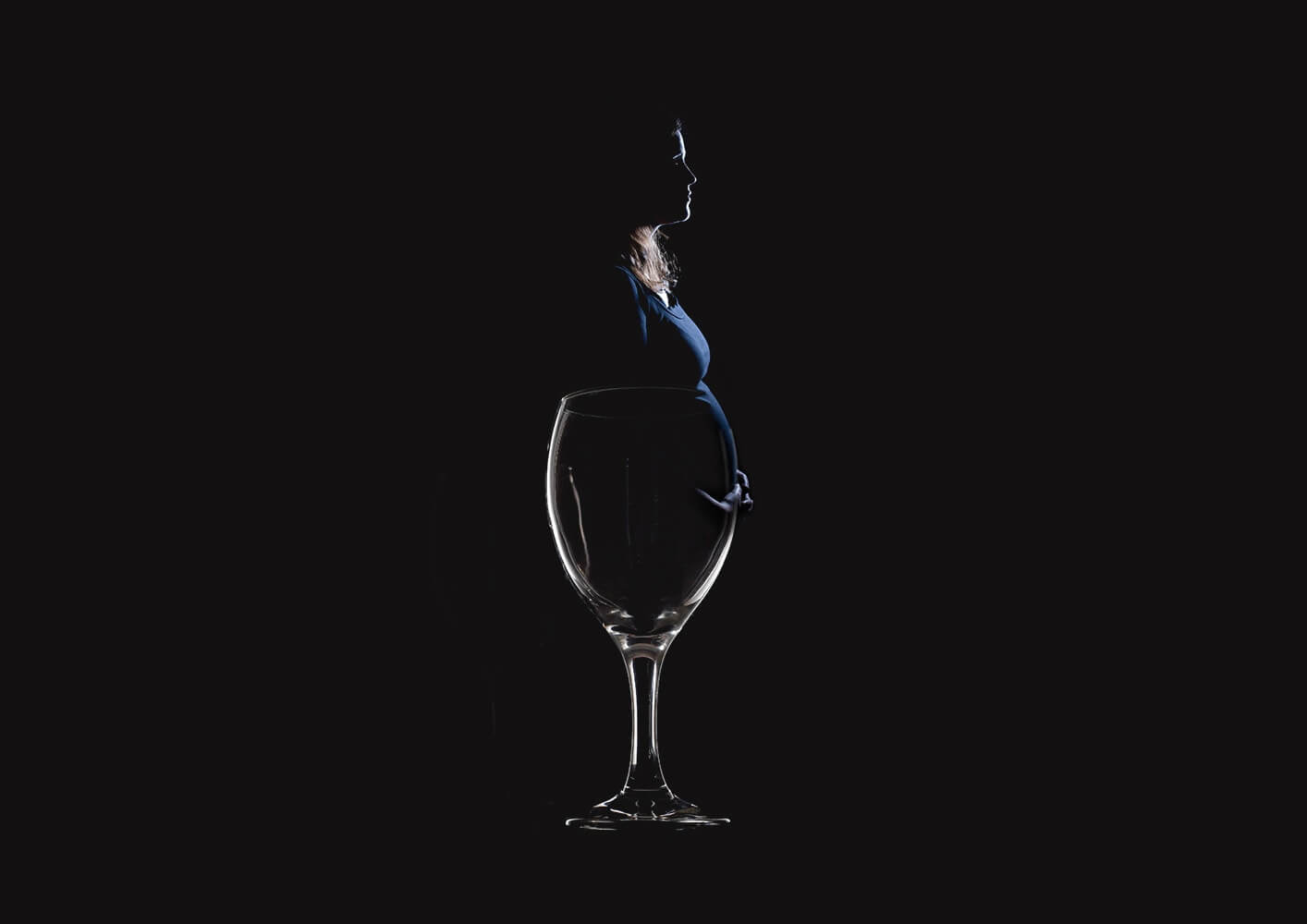
If there's one question that should teach you to stop googling for parenting advice, it's "Can I drink while pregnant?"
Visit any of the big medical publications, and you'll see the oft-repeated assertion that while a drink or two is "probably" fine, "no amount has been proven safe for baby."
Visit any of the big-name baby sites, and you'll likely find breathless articles about celebrities caught with a drink in hand while pregnant.
Visit a parenting forum and you'll see scores of people excoriating posters for even asking the question, with just as many fervently asserting how mamas-to-be should just calm down and have a drink already.
This article will not add to this chaos by trying to convince you one way or the other about drinking while pregnant. Instead, it discusses how one pregnant economist upended conventional wisdom on the topic of drinking while pregnant, making us rethink the long-range consequences of relying on poor data.
 The most controversial chapter in the book is certainly the one covering alcohol, caffeine, and tobacco. About alcohol consumption during pregnancy, Oster concludes, "there is no good evidence that light drinking during pregnancy negatively impacts your baby," and that expectant mothers "should be comfortable with up to one drink a day in the second and third trimesters" and "one to two drinks a week in the first trimester."
Given the way alcohol is metabolized, Oster argues, the rate of consumption is as important as the frequency. Drink at a slow pace and most harmful bi-products of alcohol won't make it to the baby.
To talk about the effects of alcohol consumption during pregnancy, Oster asserts, we also have to talk about how alcohol consumption in pregnancy is studied. Given that the safety of alcohol consumption during pregnancy is a controversial topic, and because alcohol consumption in even moderate amounts is suspected to do harm, it would be unethical to randomly group women and have one group abstain from alcohol, while assigning other groups to one drink a day, two drinks a day, and so on.
Instead of randomized controlled trials, then, physicians and other researchers have had to rely on survey data to draw conclusions about alcohol consumption during pregnancy. Oster sifts through the available literature, choosing those studies that best controlled for confounding factors, and finds that alcohol consumed in small quantities has no negative consequences for children.
One of the criticisms of Oster's work is that she cherry-picked data. But as an economist, Oster is especially well-suited to identifying how a study that initially seems well-constructed might be flawed. She looks, for example, at a paper published in Pediatrics in 2001, in which researchers concluded that light drinking during pregnancy impacts children's future behavior.
Oster summarizes the authors' conclusion: "When the authors compared women who didn't drink during pregnancy to those who had one drink or less per day, they found more evidence of aggressive behavior (although not of other behavior problems) among the children of women who drank."
That sounds like damning evidence for the danger of alcohol consumption during pregnancy. One drink a day and your child will be the school bully.
What's missing from the researchers' conclusions, Oster notes, is that nearly half of the study's drinking mothers were also using cocaine, while only 18 percent of the non-drinking mothers were. Oster posits that perhaps it's the difference in cocaine use that made the impact on childhood behavior.
Furthermore, the very fact that "only 18 percent" of the non-drinking group used cocaine suggests that the population in this study may not be representative of the population as a whole. Because cocaine sometimes correlates with other issues that may be considered risk factors for childhood development, it's not possible to draw strong conclusions about drinking more broadly from this single study.
The most controversial chapter in the book is certainly the one covering alcohol, caffeine, and tobacco. About alcohol consumption during pregnancy, Oster concludes, "there is no good evidence that light drinking during pregnancy negatively impacts your baby," and that expectant mothers "should be comfortable with up to one drink a day in the second and third trimesters" and "one to two drinks a week in the first trimester."
Given the way alcohol is metabolized, Oster argues, the rate of consumption is as important as the frequency. Drink at a slow pace and most harmful bi-products of alcohol won't make it to the baby.
To talk about the effects of alcohol consumption during pregnancy, Oster asserts, we also have to talk about how alcohol consumption in pregnancy is studied. Given that the safety of alcohol consumption during pregnancy is a controversial topic, and because alcohol consumption in even moderate amounts is suspected to do harm, it would be unethical to randomly group women and have one group abstain from alcohol, while assigning other groups to one drink a day, two drinks a day, and so on.
Instead of randomized controlled trials, then, physicians and other researchers have had to rely on survey data to draw conclusions about alcohol consumption during pregnancy. Oster sifts through the available literature, choosing those studies that best controlled for confounding factors, and finds that alcohol consumed in small quantities has no negative consequences for children.
One of the criticisms of Oster's work is that she cherry-picked data. But as an economist, Oster is especially well-suited to identifying how a study that initially seems well-constructed might be flawed. She looks, for example, at a paper published in Pediatrics in 2001, in which researchers concluded that light drinking during pregnancy impacts children's future behavior.
Oster summarizes the authors' conclusion: "When the authors compared women who didn't drink during pregnancy to those who had one drink or less per day, they found more evidence of aggressive behavior (although not of other behavior problems) among the children of women who drank."
That sounds like damning evidence for the danger of alcohol consumption during pregnancy. One drink a day and your child will be the school bully.
What's missing from the researchers' conclusions, Oster notes, is that nearly half of the study's drinking mothers were also using cocaine, while only 18 percent of the non-drinking mothers were. Oster posits that perhaps it's the difference in cocaine use that made the impact on childhood behavior.
Furthermore, the very fact that "only 18 percent" of the non-drinking group used cocaine suggests that the population in this study may not be representative of the population as a whole. Because cocaine sometimes correlates with other issues that may be considered risk factors for childhood development, it's not possible to draw strong conclusions about drinking more broadly from this single study.
A pregnant economist walks into a bar
In "Expecting Better: Why the Conventional Pregnancy Wisdom is Wrong – and What You Really Need to Know", Emily Oster, an economist at Brown University, analyzes the existing medical literature on many controversial pregnancy topics. She weaves her own pregnancy experiences with her data analysis to show readers how she applied the findings to her own life. The result is an unusual and refreshing parenting book that presents evidence without advice. Parents-to-be are instructed to weigh that evidence themselves and use it to make their own thoughtful decisions.The most controversial chapter in the book is certainly the one covering alcohol, caffeine, and tobacco. About alcohol consumption during pregnancy, Oster concludes, "there is no good evidence that light drinking during pregnancy negatively impacts your baby," and that expectant mothers "should be comfortable with up to one drink a day in the second and third trimesters" and "one to two drinks a week in the first trimester."
Given the way alcohol is metabolized, Oster argues, the rate of consumption is as important as the frequency. Drink at a slow pace and most harmful bi-products of alcohol won't make it to the baby.
To talk about the effects of alcohol consumption during pregnancy, Oster asserts, we also have to talk about how alcohol consumption in pregnancy is studied. Given that the safety of alcohol consumption during pregnancy is a controversial topic, and because alcohol consumption in even moderate amounts is suspected to do harm, it would be unethical to randomly group women and have one group abstain from alcohol, while assigning other groups to one drink a day, two drinks a day, and so on.
Instead of randomized controlled trials, then, physicians and other researchers have had to rely on survey data to draw conclusions about alcohol consumption during pregnancy. Oster sifts through the available literature, choosing those studies that best controlled for confounding factors, and finds that alcohol consumed in small quantities has no negative consequences for children.
One of the criticisms of Oster's work is that she cherry-picked data. But as an economist, Oster is especially well-suited to identifying how a study that initially seems well-constructed might be flawed. She looks, for example, at a paper published in Pediatrics in 2001, in which researchers concluded that light drinking during pregnancy impacts children's future behavior.
Oster summarizes the authors' conclusion: "When the authors compared women who didn't drink during pregnancy to those who had one drink or less per day, they found more evidence of aggressive behavior (although not of other behavior problems) among the children of women who drank."
That sounds like damning evidence for the danger of alcohol consumption during pregnancy. One drink a day and your child will be the school bully.
What's missing from the researchers' conclusions, Oster notes, is that nearly half of the study's drinking mothers were also using cocaine, while only 18 percent of the non-drinking mothers were. Oster posits that perhaps it's the difference in cocaine use that made the impact on childhood behavior.
Furthermore, the very fact that "only 18 percent" of the non-drinking group used cocaine suggests that the population in this study may not be representative of the population as a whole. Because cocaine sometimes correlates with other issues that may be considered risk factors for childhood development, it's not possible to draw strong conclusions about drinking more broadly from this single study.