Editor's note: I'm so excited to join the authors of this article and the team behind Big Little Learners May Sofi Brennan and Jennifer Garris for a virtual conversation about getting ready for back to school without the stress on Wednesday, August 5 at 11 AM Centra Time. Sign up here. We can't wait! - Hannah Howard, ParentCo. Editor-in-chief
There's nothing quite like the start of a new school year. Whether your child is starting school for the very first time or heading back after a long summer, they may feel excited one moment and nervous, unsure, or overwhelmed the next.
If we're being honest, it's emotional for us, too. One day we're kissing boo-boos and reading "just one more" bedtime story and before we know it, we're standing outside the classroom door wondering if they'll remember how to open their lunchbox, make a new friend, or miss us as much as we'll miss them.
Starting school is a big milestone not just for our children, but for us as parents. While we're learning to let go a little more, our kids are learning to take brave steps toward something new. We can't take away every first-day worry, but we can help them feel prepared for it.
When children know what to expect, have words to express what they're feeling, and learn a few simple coping tools to lean on, big transitions become much more manageable. As you get ready for the new school year, remember the acronym PREPARE, for simple strategies to help make the transition a little easier.
P – Prepare Them for What to Expect
Transitions can feel hard, especially when kids don't know what's coming. Talking about school ahead of time helps the experience feel more familiar and less overwhelming.
In the weeks leading up to school, read books about starting school together. Favorites like The Kissing Hand and The Invisible String are great conversation starters. If possible, visit the school, attend an orientation, drive by the building, or look at pictures together.
Walk your child through what the day might look like using simple, concrete language: "First we'll get dressed and eat breakfast. Then we'll drive to school. I'll give you a big hug, and your teacher will help you into your classroom."
This is also a great time to normalize all of the feelings that come with starting something new. Your child can be excited to make friends and nervous to say goodbye. They can look forward to art class while also feeling unsure about a new teacher.
Rather than trying to convince your child that school will be perfect, remind them that it's okay to have more than one feeling at the same time. "You can feel excited to play with new friends and nervous about saying goodbye to me."
R – Rehearse the School Routine
Kids thrive on routine and predictability. If summer has meant later bedtimes and slower mornings, try not to wait until the night before school to suddenly change everything.
A week or two before school starts, gradually shift bedtime and wake-up time by 10 to 15 minutes until you're closer to the school schedule.
You can also practice some of the little things your child will need to do independently throughout the day, like opening their lunch container, zipping their backpack, putting on their shoes, and packing up their belongings.
These may seem like small skills, but feeling capable and prepared can go a long way toward helping kids feel confident in a new environment.
Let your child be part of the preparation, too. Choosing a backpack, picking out a lunchbox, or labeling school supplies gives them a sense of ownership over this new adventure.
E – Establish Visual Routines
Mornings can feel rushed, especially when everyone is adjusting to a new routine. A simple visual schedule helps kids know what comes next without needing constant reminders.
A morning routine might include:
- Wake up
- Brush teeth
- Get dressed
- Eat breakfast
- Put on shoes
- Grab backpack
-
Go to school
For younger children, use pictures instead of words.
Knowing what comes next helps kids move through the morning more independently and often means fewer reminders, fewer power struggles, and a calmer start to the day for everyone.
P – Put Feelings Into Words
Sometimes kids act out because they don't yet have the language to explain what's happening inside of them.
A child shouting, "I'm not going to school!" may actually be trying to say, "I'm nervous," "I don't know what to expect," or "I'm worried about leaving you."
Instead of waiting for kids to find those words, gently offer them.
"I wonder if you're feeling a little nervous about school."
"Sometimes our tummies feel funny when we're worried about something new."
Practice simple phrases they can use at home and at school:
- "I feel nervous."
- "I feel scared."
- "I need help."
- "I need a hug."
-
"I miss you."
Tools like a Mood Meter, feelings thermometer, or even a simple body check can also help children recognize and name what they're feeling. Ask questions like, "Where do you feel that nervous feeling?" or "What is your body telling you right now?"
The more we practice talking about feelings during calm moments, the easier it becomes for kids to use those words when big emotions show up.
A – Acknowledge and Validate Their Feelings
When a child says they're scared about school, our instinct is often to reassure them.
"Don't worry. You'll be fine!"
While well-intentioned, kids don't always need us to talk them out of their feelings. They need to know their feelings make sense.
Instead, try: "It makes sense that you're nervous. This is something new, and new things can feel hard. I'm here to help you."
When kids feel understood, they're better able to move through those big emotions.
R – Regulate with Coping Tools and Connection
Once we've acknowledged the feeling, we can help children figure out what to do with it.
Practice a few simple coping strategies before the first day of school. Try taking three slow breaths, squeezing your hands together, or repeating a simple phrase like, "I can do hard things."
A predictable goodbye routine can also help. Maybe it's two hugs and a high five. Maybe it's a special handshake or goodbye phrase. Keeping it short and consistent helps children know exactly what to expect.
Some kids also find comfort in carrying a small reminder of home, like a family photo tucked into their backpack or a matching bracelet, if their school allows it.
The goal isn't for children to think, "I'll never feel nervous." It's for them to learn, "I can feel nervous, and I know what helps."
E – Explore School Through Play
One of the best ways to prepare kids for something new is through play.
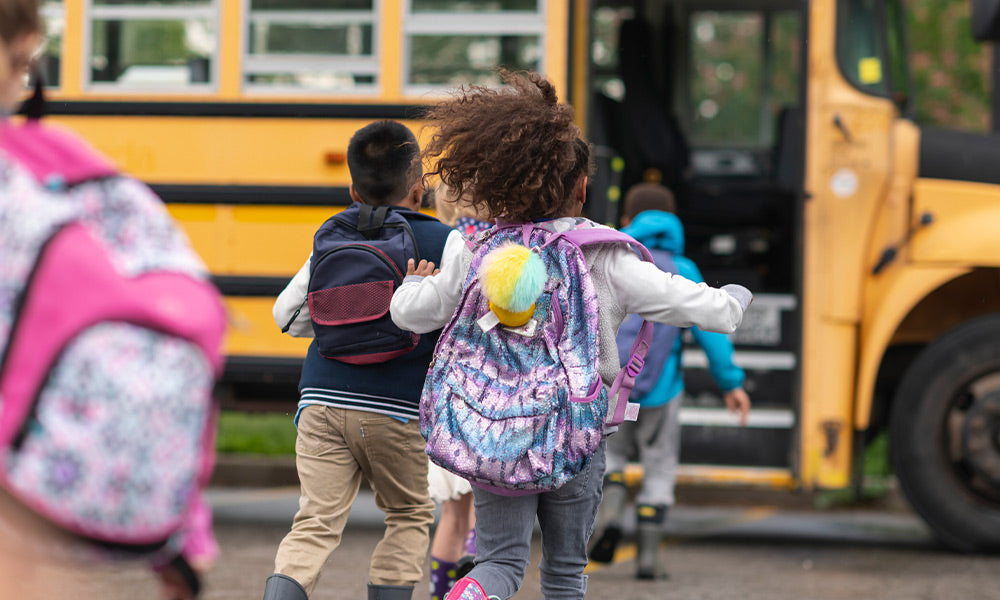
Grab some stuffed animals, dolls, or action figures and act out different parts of the school day. Practice getting on the bus, walking into the classroom, sitting for circle time, eating lunch, asking the teacher for help, and saying goodbye.
Take turns being the teacher and the student. You may be surprised by what comes up when your child is leading the play. Those moments often give you a glimpse into what they're wondering, or worrying, about.
Play gives children a safe space to practice new situations, ask questions, and work through feelings before they experience them in real life.
Starting school doesn't require kids to feel fearless. It simply asks them to take a brave step into something new. By preparing them for what to expect, giving them words for their feelings, and teaching them simple tools to cope, we're helping them build a skill that extends far beyond the first day of school: confidence in their ability to handle life's new experiences.